


WorldTour
Jai Hindley: Back to Blockhaus
Jai Hindley reflects on the climb where he won in 2022 and looks ahead to the Giro’s first major mountain test.


When Jai Hindley thinks back to Blockhaus, the memory is not immediately one of triumph. It is of difficulty, survival, and a result that arrived almost against the feeling of the day.
“Suffering,” he says, laughing. “I wasn’t having my best legs in the first week there and really struggled. I was more in survival mode rather than going for the stage, so I was a bit surprised when I ended up winning it.”
That was 2022, when Hindley took one of the defining victories of his career on one of the Giro d’Italia’s most demanding climbs. Blockhaus became part of his story, but not in the neat, inevitable way that results sheets can sometimes suggest. It was a day won through patience, composure, and the ability to stay present when the race had already become difficult.
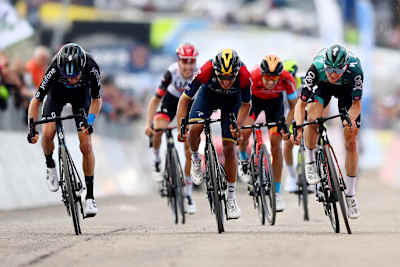
Jai Hindley in the final metres before the finish line on Blockhaus in 2022
© Gettty Sport
In 2026, Blockhaus returns early in the race. For the GC riders, it won’t settle everything, but it should reveal plenty. Hindley expects it to be the first moment where the overall contenders are properly tested.
“I think it will be the first real true test,” he says. “There will definitely be gaps. I don’t think the race will be decided there, but we’ll get a good idea of who’s in form.”
That early position in the race gives the stage a particular tension. It is too soon for desperation, but too hard to hide. A summit finish on Blockhaus asks enough of the peloton that weakness is difficult to disguise, while the strongest teams may already be able to shape the race in their favour.
I don’t think the race will be decided there, but we’ll get a good idea of who’s in form

For Red Bull – BORA – hansgrohe, Hindley believes the key will be to arrive with options still in the front group. On a climb like Blockhaus, strength is not only individual. It is also tactical. Having more than one rider in position means the team can respond, apply pressure, and avoid being forced into a single predictable role.
“It’s definitely important to have numbers to play in the final there,” he says. “Probably the GC group can still be quite big and it can be quite tactical in the final.”
For Hindley, the ideal scenario is not a quiet approach to the base of the climb. It is a hard day before the final ascent, with fatigue already in the legs and the race reduced by the time the decisive kilometres begin.
“I think to have a super hard day and then to arrive at the base with a lot of guys fatigued would probably suit Giulio and me the best,” he says.
There is experience behind that view. Since 2022, Hindley has lived many more versions of the same basic Giro truth: on the final climb, everyone is suffering, whether they show it or not. The lesson is not to panic just because the day feels hard.
“Always keep calm on the final climb,” he says. “Even if you feel bad, just remember that everyone else is suffering too.”
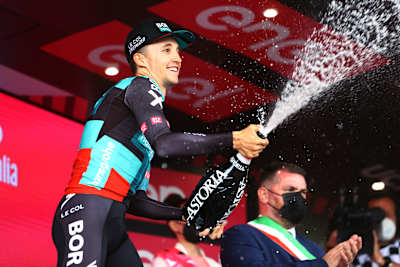
Jai celebrating his win on Stage 9 of the 2022 Giro d'Italia
© Gettty Sport
Blockhaus carries personal meaning for Hindley, but he does not want to treat it as something separate from the rest of the Giro. The climb matters because every summit finish matters. The memory is there, but the task is still the same: stay focused, manage the day, and be ready when the race reaches its hardest point.
“I will take it as any other stage of the Giro,” he says. “When you ride for GC every stage is important, especially mountain-top finishes. You have to be focused and clear about what you want to achieve.”
In 2022, Blockhaus gave Hindley a victory he did not see coming. In 2026, it offers something different: an early test, a familiar road, and another chance to measure himself against the race.


