Ben Zwiehoff
© Twila Federica Muzzi / Red Bull Content Pool
WorldTour

Ben Zwiehoff: “Either you win races – or you help others to do so”
In this interview, Ben Zwiehoff talks about his unusual path to the WorldTour, the art of supporting teammates and a major goal that is still missing from his career.
Written by RBH
9 min readPublished on
Ben Zwiehoff will remain with Red Bull – BORA – hansgrohe beyond 2026. For the 32-year-old, the extension of his contract is more than just the continuation of an unusual career: it was only in 2021 that the Essen-born rider switched to road cycling after many years as a mountain biker – and found a role there that suits him perfectly. Rather than defining himself solely by his own results, Zwiehoff has developed into one of the most reliable support riders on the WorldTour. He is someone who helps shape races – often long before the TV cameras show the final stages.
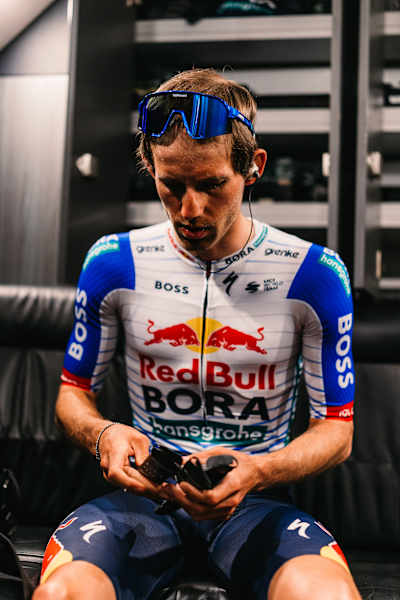
In the tunnel: Ben Zwiehoff

In the tunnel: Ben Zwiehoff

© Maximilian Fries / Red Bull Content Pool

Yet he knows the other side of the coin too: in 2023, he himself competed for top results on several occasions, finishing second in the Czech Republic and Turkey, amongst other places. In this interview, Zwiehoff explains why working for team leaders now fulfils him just as much as a result of his own, why a domestique needs empathy and racing instinct – and why, despite his clear role, he still longs for a victory of his own on the big stage.
01

From mountain biker to road pro

Ben, looking back at your career today, the switch from mountain biking to road cycling seems almost logical. Was it like that back then too?

Ben Zwiehoff: Not at all. I did realise relatively early on that I probably wouldn’t be good enough to compete at the very top in mountain biking. My coaches told me: ‘On a good day, you might be able to finish in the top 15 or top ten in the World Cup, but you’re missing something to reach the very top.’ At the same time, though, I was a professional mountain biker, had long-term contracts and was able to turn my hobby into a career.

Ben Zwiehoff: You don’t just throw that security away. I knew from my training data that my fitness level might not be too bad for road racing. But nobody knew whether I could actually put that into practice in road races. So it was clear to me: if I take this step, it has to be under the right circumstances.

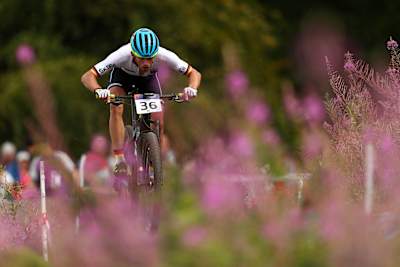
Mountain biker Ben Zwiehoff at the 2018 European Championships

Mountain biker Ben Zwiehoff at the 2018 European Championships

© Getty Images

How did this ‘right set-up’ come about?

Ben Zwiehoff: In 2019, I was put in touch with the team through an acquaintance. After that, I went to a training camp with the team and tried to integrate properly right from the start. That means I didn’t go up every hill thinking: ‘I’m the mountain biker and I’m going to leave you all behind now.’ Instead, I wanted to be a team player right from the start. That seemed to go down well, because a few months later I signed my first WorldTour contract.

Your start in the WorldTour was quite brutal, though.

Ben Zwiehoff: My first proper WorldTour race was the 2021 UAE Tour. And on the first stage, after about 100 metres of neutralised riding, we were straight into a crosswind. The problem was: I’d never heard of wind edges before. We’d had a quick crash course beforehand – and then it was simply a matter of survival. I had absolutely no experience; I didn’t even know that I could take a breather between the cars. I just rode on sheer strength.

In the end, I still ended up in the second group and finished around 30th on the stage. I reckon that’s when some of the team realised: ‘OK, he might not have a clue yet, but he can ride.’
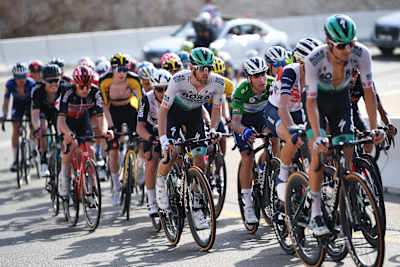
Das erste WorldTour-Rennen: die UAE Tour 2021

Das erste WorldTour-Rennen: die UAE Tour 2021

© Getty Images

When did you first feel: ‘Now I’m a proper road pro’?

Ben Zwiehoff: It took a while. A key moment was my first Vuelta. Felix Großschartner was our team captain back then. On the 17th stage, he unfortunately crashed and I brought him back into the peloton after the final climb. Afterwards, I was told: ‘You saved his top-ten finish today.’ A Grand Tour lasts three weeks, but when you have a day like that as a domestique, you’ve made a huge difference. That was the first time I realised just how fulfilling this role can be.

02

Personal results followed – yet Ben preferred being a domestique

In 2023, however, you were regularly competing for top results yourself. Why did you then decide to focus more on the domestique role anyway?

Ben Zwiehoff: 2023 was a very strong year. I came second in the Czech Republic, second in Turkey and was actually right up there at the front in almost every race. That gave me a real boost, of course. At the same time, I also got to know my own level very well. When everything clicks, I can finish in the top ten at WorldTour level and compete for a top-five spot in smaller races. With a lot of luck, I might even win once in a while.

But I’ve come to realise that the sport is becoming increasingly polarised. Especially in a team like ours, it’s a case of: either you win races – or you help the riders who can win them. There’s less and less room in between. I’m in the second group.

That sounds very matter-of-fact. Was it hard for you to come to that realisation?
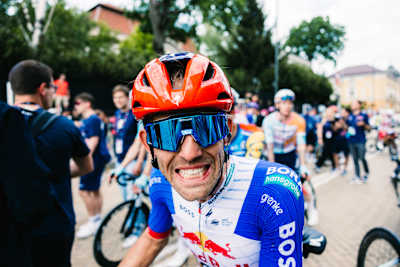
Ben Zwiehoff: Not at all. I’ve always been a team player. That was actually one of the reasons why I wanted to leave mountain biking behind at some point. In that sport, you’re ultimately always on your own. Even in the national team, there’s a certain amount of competition amongst us. I missed having that shared goal. On the road, I can say: ‘We’ve achieved something as a team.’ That just suits me very well.

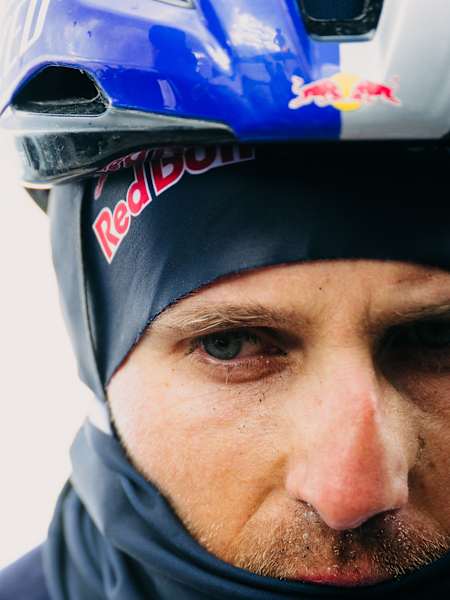
Ben Zwiehoff after Stage 3, wearing the Wings for Life World Run helmet

Ben Zwiehoff after Stage 3, wearing the Wings for Life World Run helmet

© Maximilian Fries

What distinguishes a very good domestique from a rider who’s simply strong?

Ben Zwiehoff: As a good domestique, you have to be able to put yourself in your captain’s shoes. What does he need right now? What would help me in this situation? For that, you need empathy; you have to talk to each other and you have to be absolutely loyal. If you’re told: ‘You’re riding now’ – and you know full well that if you do that, your own day is practically over afterwards – then you still have to see it through to the end.
Then there’s experience. Positioning, reading the race situation, knowing which group is dangerous or how to put pressure on other teams. A good domestique isn’t just someone who can ride up a mountain quickly.

Quotation
As a good support rider, you have to be able to put yourself in your captain’s shoes.

How do you motivate yourself to give your all when you know that, in the end, someone else will be fighting for the win?

Ben Zwiehoff: I picture what could happen if I do my job really well. Maybe I’ll get our captain over the mountain; afterwards, there’ll only be ten riders left, he’ll attack and win the stage. Then I know: I’ve made a massive difference today.

These moments now give me almost the same feeling as if I were riding for the win myself on the final climb. It was partly the same at the Giro. You break the peloton apart at the front, the whole cycling world is watching – and you know why you’re doing it. Those are the perfect moments.
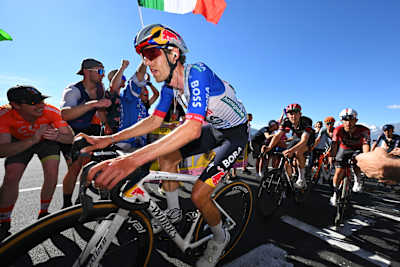
Ben Zwiehoff at work

Ben Zwiehoff at work

© Getty Images

03

Career not yet complete

You don’t see much of this work on TV, though. Does that bother you?

Ben Zwiehoff: No. Many people underestimate just what an extreme team sport cycling is anyway. You can have the strongest leader in the race – but if his team can’t control certain situations, it will eventually become impossible for him. Sometimes your job is to spend an hour deciding which riders are allowed into a group and which aren’t. After that, there might only be 20 riders left in the peloton. From the outside, all you see later is the leader winning. But without that work beforehand, he might not win. That’s exactly what I find exciting.

Does taking on the clear role of a domestique mean that the desire for a victory of your own has disappeared?
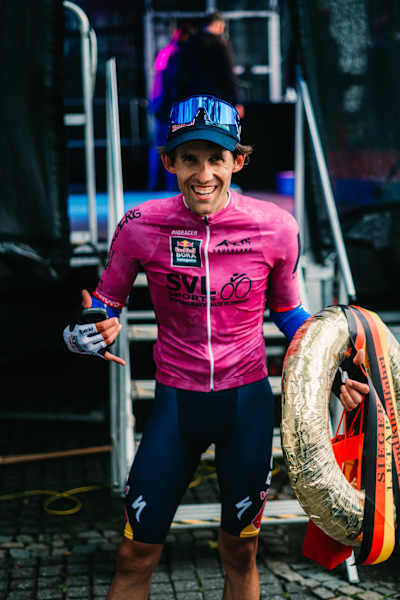
Ben Zwiehoff: No, not at all. I’ve also spoken explicitly to our performance department about this: over the next two years, I still want to win something. It’s not as if I’m saying: ‘I’m just a domestique now.’ Opportunities always arise. And after all that hard work, I’d certainly like to achieve something like that at some point – preferably, of course, on a big stage. You can’t plan or guarantee that. But the idea of being able to say one day: ‘I’ve worked on the road for seven years for this’ – that really motivates me.

Zwiehoff is delighted with his first victory as a professional cyclist

Zwiehoff is delighted with his first victory as a professional cyclist

© Werner Müller-Schell

And what else is still missing from your career?

Ben Zwiehoff: I’d love to win a Grand Tour with the team again. I’ve experienced for myself just how special that is. And then, of course, there’s the Tour de France. The competition in our team is extremely fierce; I’m fully aware of that. But after all these years on the road and with the experience I’ve gained, I’d feel ready to tackle the Tour. I wouldn’t be sad now, nor would I regard my career as a failure, if it never works out. But I’d be lying if I said I didn’t want to experience it at least once. I think that’s what almost every cyclist wants.

Quotation
And then, of course, there’s the Tour de France.

Finally: you’re now one of the most established domestiques in the WorldTour. Which riders have you learnt the most from?

Ben Zwiehoff: Felix Großschartner has always been a great role model for me. A superb team player, extremely strong himself and incredibly clever, especially when it comes to positioning. You pick up a lot from riders like that. In recent years, I’ve also learnt an awful lot from Danny van Poppel. That ‘cunning’ in the race: how do you make life difficult for other teams? How do you control positions? How do you get your riders to the front? That’s crucial for me.

That’s why I still try, even today, to consciously step out of my comfort zone. As a domestique, you have to keep developing in all areas. The more versatile you are, the more valuable you are to the team.

Part of this story

Ben Zwiehoff

Ben Zwiehoff is a strong climber and reliable team rider who brings endurance and steady pacing to demanding mountain stages.

GermanyGermany
View Profile